Physics-Guided Deep Learning
AirPGDL: Physics-Guided Deep Learning for Air Quality Forecasting
View full-size diagram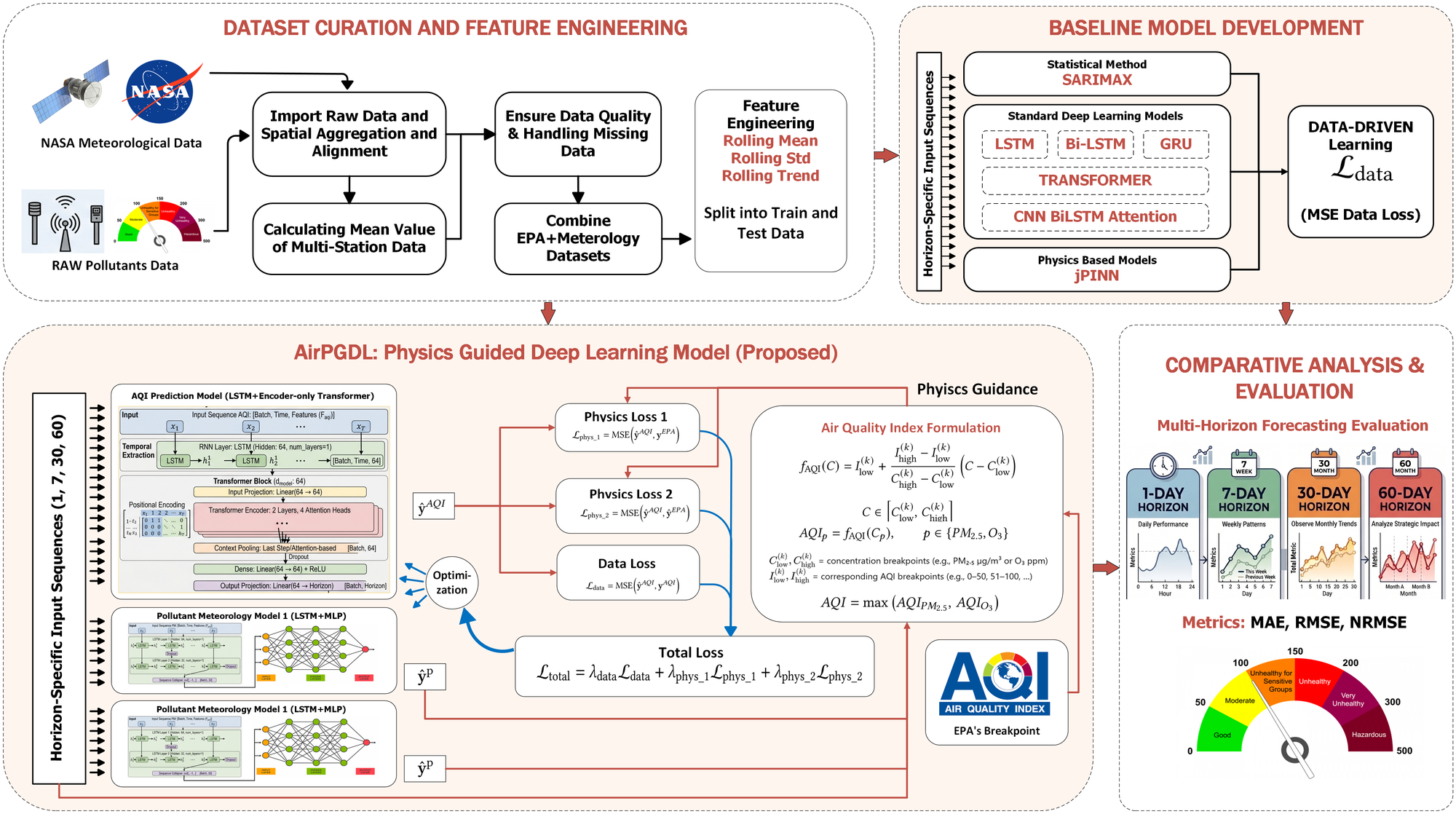
Applied machine learning and spatiotemporal data science, applied to Earth and environmental systems and the funded projects putting it into practice.
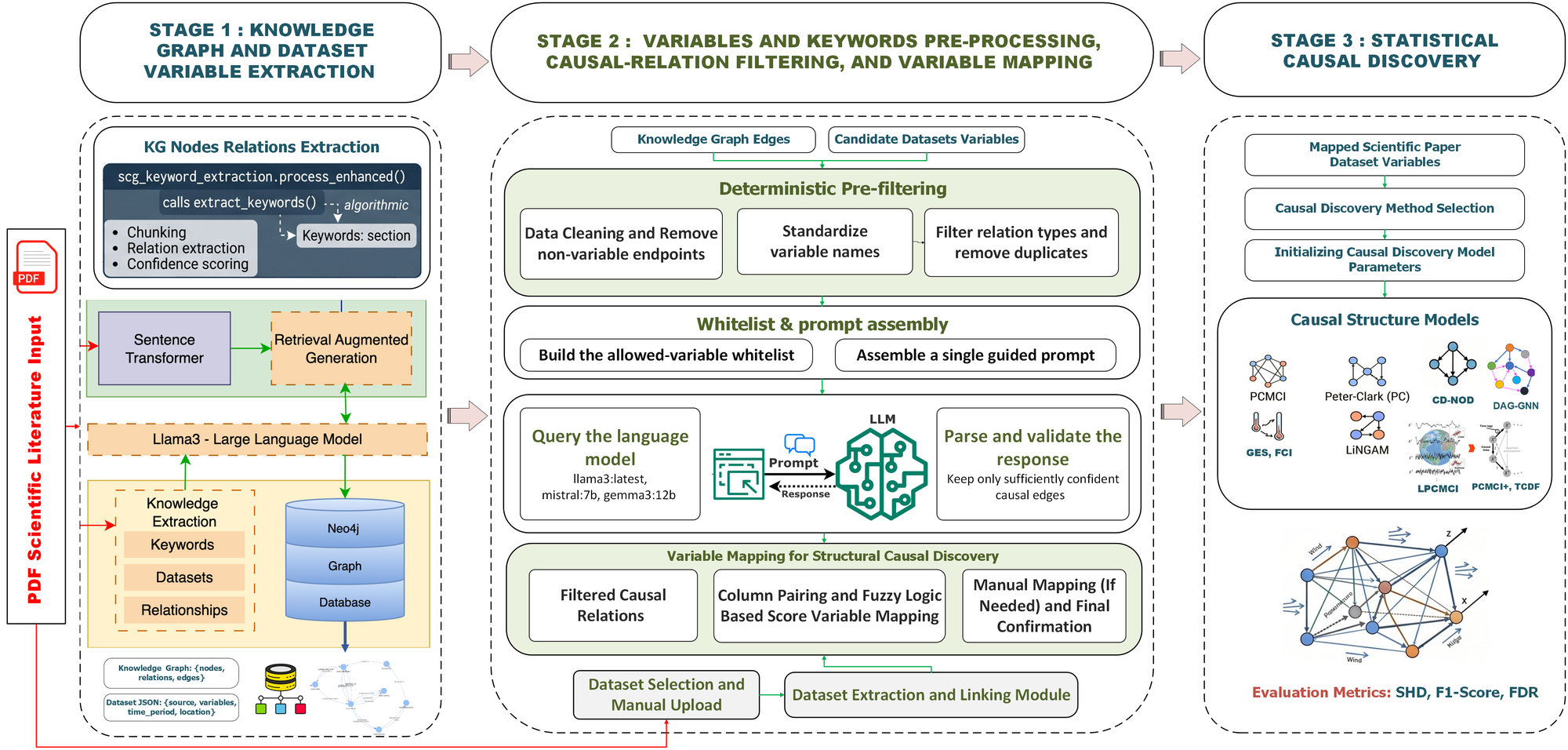
We develop methods for causal discovery and causal inference in complex, high-dimensional systems, bridging classical causal inference theory with modern deep learning. This work underpins our broader effort to build models that don't just predict, but also explain the drivers behind observed changes in physical systems.
Earth science data is inherently spatiotemporal, correlated across both space and time. We design deep learning architectures (including attention-based and multi-temporal models) that capture these dependencies to improve forecasting skill for complex environmental variables.
A core application area of the lab is Arctic sea ice forecasting. Our prior work includes attention-based ensemble LSTM models and MT-IceNet, a spatial and multi-temporal deep learning model for sea ice prediction. This work is now extended through the NSF-funded project Causality-at-Scale for Polar Regions, which develops scalable causal inference methods for polar climate systems.
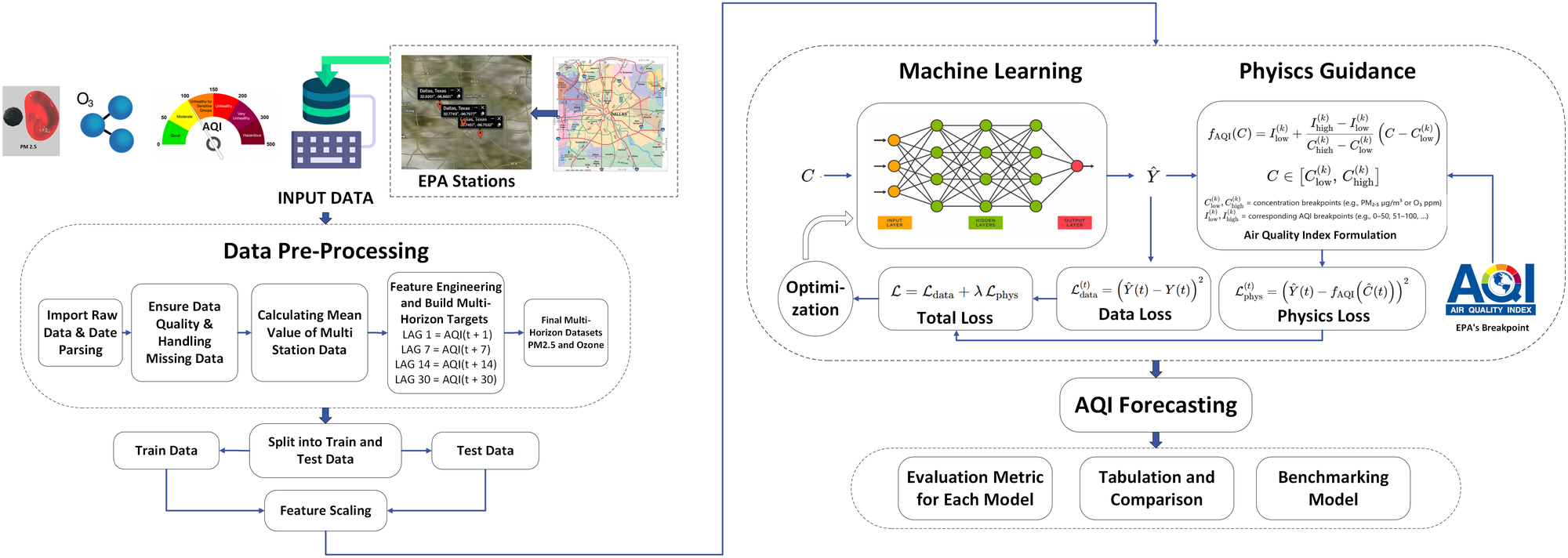
We develop physics-guided and physics-informed deep learning models that embed domain equations, such as the EPA Air Quality Index formulation, directly into the learning process, improving generalization and interpretability over purely data-driven baselines like LSTM, GRU, and Transformer models.
We model and forecast air quality, including PM2.5 and ozone-based AQI, across multiple time horizons for North Texas, benchmarking statistical, deep learning, and physics-guided approaches to support real-world environmental decision-making.
Beyond the poles, we apply machine learning to Earth observation and environmental sensing problems, including satellite-based cloud detection and domain adaptation across remote sensing modalities, connecting large-scale Earth data methods to real-world environmental monitoring.
Developing scalable causal inference methods for polar and Arctic climate systems, extending the lab's prior sea ice forecasting work into a causal framework that can help attribute drivers of rapid Arctic change.
Related research areaApplying scientific machine learning methods to model and forecast regional air quality, connecting large-scale Earth data science methods developed in the lab to decisions with direct local impact.
A spatial and multi-temporal deep learning model for Arctic sea ice forecasting, published at the IEEE/ACM International Conference on Big Data Computing (2022).
See publicationAn attention-based ensemble LSTM approach for forecasting Arctic sea ice extent, laying the groundwork for the lab's later spatiotemporal and causal modeling work.
See publication